
There is a particular kind of hunger that arrives at the end of a long day.
You are hungry enough to eat.
You are not hungry enough to want a project.
The fridge may be full. The pantry may be stocked. You may even know how to cook.
And still, the question appears.
What should I make?
It sounds simple. It rarely is.
Because the moment you ask it, a second round of questions follows. What do I feel like. What needs to be used. What is healthy enough. What will create the least mess. What will I still want twenty minutes from now.
The food is not necessarily difficult.
The deciding is.
That is why one of the most useful things you can build into a plant-based life is not a larger recipe collection.
It is a smaller set of answers.
A Default Meal Is Already Decided
A default meal is not a rule.
It is not a meal plan.
It is not something you are required to eat on a particular day.
It is simply a meal you know well enough that it no longer needs a meeting in your head before you make it.
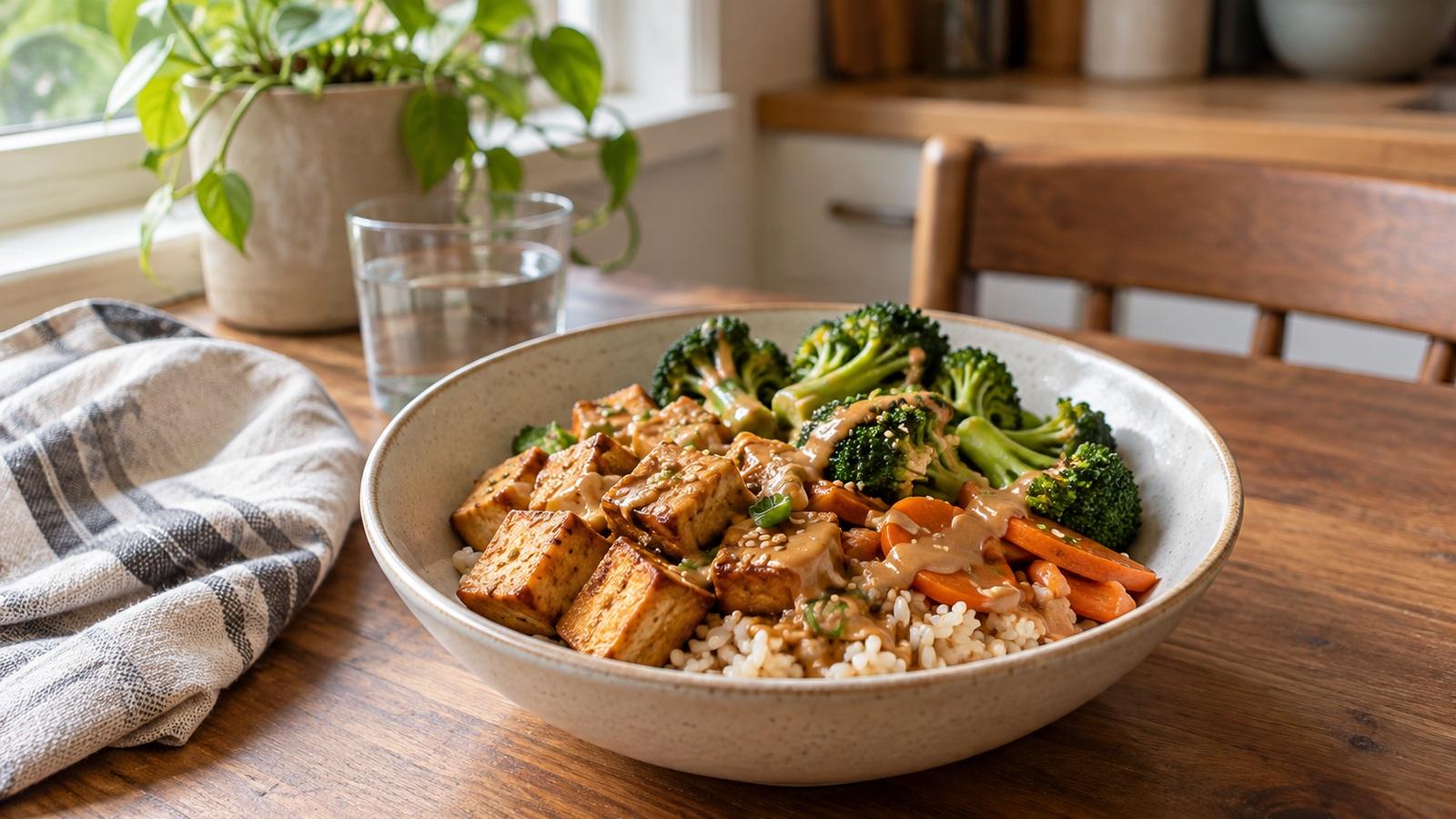
Maybe it is rice, frozen vegetables, tofu, and a sauce you always keep around.
Maybe it is pasta with vegetables and white beans.
Maybe it is soup and bread.
Maybe it is noodles, broth, tofu, and whatever vegetables are easiest to reach.
The exact meal matters less than the fact that you already know what happens next.
You know which pan to use.
You know roughly how long it takes.
You know whether you will actually eat the leftovers.
You know what the kitchen looks like afterward.
That familiarity removes more effort than most shortcuts do.
Stop Asking Every Meal to Be Interesting
There is a quiet pressure around food to keep things new.
New recipe. New ingredient. New bowl. New sauce. New way to make Tuesday feel less like Tuesday.
Novelty can be enjoyable. It can also be expensive in attention.
A new meal asks you to read, compare, shop, remember, measure, and pay attention. None of those things are unreasonable on their own. Together, they turn dinner into something that requires a certain kind of evening.
An evening with time.
An evening with patience.
An evening where you are still willing to make decisions.
Most evenings are not that carefully arranged.
That does not mean you should never try new food. It means new food works better when it is optional.
Your everyday meals do not need to entertain you.
They need to carry you.
Five Meals Can Be More Useful Than Fifty Recipes
A saved recipe collection can feel like preparation.
Sometimes it is.
Sometimes it is just a larger menu you have to search when you are already tired.
A small rotation works differently.
You might have five meals you can make without thinking much:
- a warm grain bowl
- a basic stir-fry
- pasta with vegetables and beans
- a simple soup
- noodles with tofu and frozen vegetables
That is enough structure to reduce decisions without making food feel rigid.
And the meals can overlap.
The same tofu can go into the bowl, the stir-fry, or the noodles. The same frozen vegetables can show up in three different dinners. Rice can be tonight's base and tomorrow's leftover.
Your groceries start working together.
The fridge becomes easier to read.
Nothing has to announce itself as a recipe before it becomes a meal.
Repetition Is Not a Failure of Creativity
Eating the same breakfast four mornings in a row can feel strangely suspicious.
At some point, you may notice the repetition and think you should change it.
Not because you are bored.
Because you think you are supposed to be.
But repetition has a useful quality: it becomes quiet.
The meal stops requiring attention.
Your hands know where things are. The ingredients are familiar. The outcome is predictable. You are not starting the day by making one more choice than necessary.
There is a difference between food becoming dull and food becoming settled.
Settled food can be supportive.
It leaves room for everything else you are trying to do.
The Best Default Is the One That Works When You Are Tired
Do not choose your default meals based on your best days.
Choose them based on an average Wednesday.
A day when work ran long.
A day when you forgot to plan.
A day when the sink already has something in it.
A day when you want food to solve hunger without becoming the main event.
That is the real test.
A useful default meal should still make sense when your energy is lower than expected.
It should use ingredients you tend to have.
It should create a manageable amount of cleanup.
It should be forgiving about substitutions.
And most importantly, it should be something you will actually eat.
Not something your most organized self thinks you should eat.
Something your real self reaches for without resistance.
You Can Still Eat Something Else
Defaults are not boundaries.
They are starting points.
If you want something different, eat something different.
If you have time for a new recipe, try it.
If friends want to go out, go out.
If your usual meal suddenly sounds terrible, make something else.
The point is not to reduce your life to five meals.
The point is to stop requiring a fresh decision every time you are hungry.
Variety becomes something you choose when you want it instead of something you have to manufacture every day.
That is a much lighter arrangement.
Make the Next Meal Obvious
If eating plant-based has started to feel heavier than it should, do not begin by finding more ideas.
Begin by noticing what already works.
Which meals do you make without looking anything up?
Which ingredients disappear from your kitchen every week?
Which dinners leave the least mess?
Which foods still sound acceptable when you are tired?
Those meals are telling you something.
They are not boring because they repeat.
They are useful because they return.
Pick a few. Keep the ingredients around. Let them become familiar enough that they stop asking for attention.
The best everyday vegan meal may not be the one you are most excited to make.
It may be the one you do not have to think about at all.
That is not giving up on good food.
It is making good food easier to live with.
If this approach feels useful, the same low-friction philosophy runs through the Easy Plant Life books. Explore the books for longer guides to making plant-based eating feel more normal, repeatable, and easy to return to.