
You are standing in the kitchen. You are hungry. You know how to cook. You have food. You have time, technically.
And you do not start.
Not because you are lazy. Not because you lack skill or ideas. Not because the meal itself feels hard.
Because you already know what comes after.
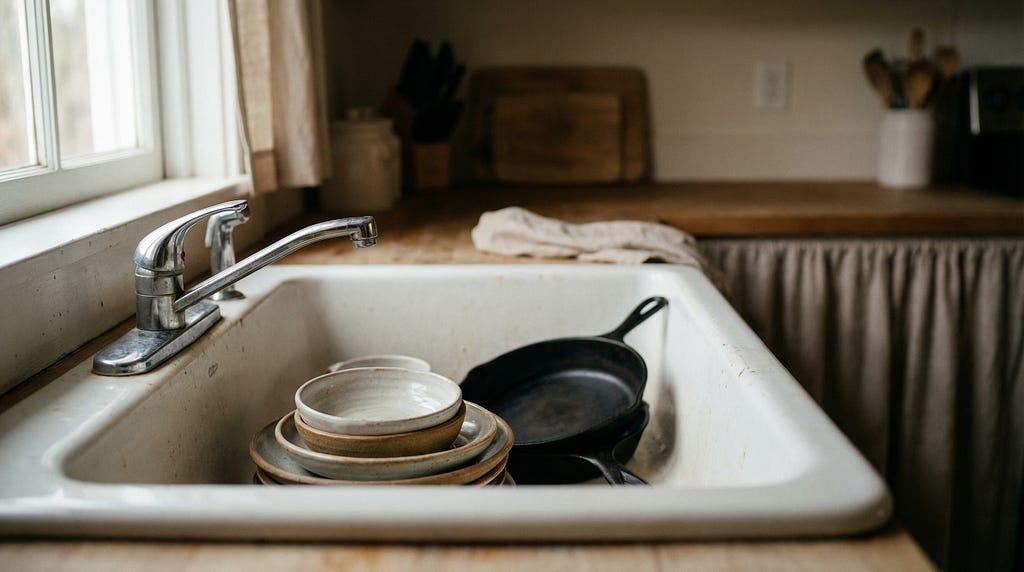
The pan. The cutting board. The pot. The spatula. The counter wiped down. The sink that was already half full before you began.
The meal takes fifteen minutes. The cleanup follows you for the rest of the evening.
That is the part nobody names.
Cooking Does Not End When You Eat
Most people think of cooking as one task. It is not. It is two.
There is the making. And there is the undoing.
The making is usually fine. Chopping, heating, assembling. These are manageable actions, sometimes even enjoyable. They have rhythm. They have a result.
The undoing is different. It has no reward. It produces nothing. It simply removes the evidence of something that already happened.
And it waits.
It waits while you eat. It waits while you sit down. It waits while you try to enjoy the evening. It sits in your peripheral vision, patient and heavy, until you deal with it or go to bed pretending it is not there.
The meal gave you twenty minutes of warmth. The sink gives you twenty minutes of obligation.
Over time, your body learns the math. And it starts saying no before you even open the fridge.
The Resistance Is Not About Food
When people say they do not feel like cooking, they rarely mean the cooking part.
They mean the total cost. The full transaction. Start to finish, including the part that has no pleasure in it.
This is why people default to delivery, or snacking, or skipping meals entirely. Not because those options are better. Because they are cleaner. They end when the eating ends. There is no residue.
A handful of nuts leaves no dishes. A delivered meal leaves one container. A home-cooked dinner leaves a kitchen that needs attention.
The path of least resistance is not the path of least hunger. It is the path of least aftermath.
Once you see this, the pattern becomes obvious. Every meal you avoid has a cleanup cost attached to it. Every meal you repeat easily has a small one.
The resistance was never about cooking.
It was about what cooking leaves behind.
The Exit Comes First
Here is the reframe that changes everything.
Before you decide what to cook, decide how it ends.
Not what you are making. How you are getting out.
This sounds backwards. It is the most useful shift you can make.
When you plan the exit first, you naturally choose meals that close cleanly. One pot instead of three. A sheet pan instead of a stovetop circus. A bowl that assembles without generating a second round of tools.
You stop choosing meals based on what sounds good and start choosing based on what disappears easily.
The constraint is not limiting. It is clarifying. It removes the meals that were always going to cost more than they gave.
One Pot Is Not a Compromise
There is a quiet shame around simple cooking.
One pot meals. Sheet pan dinners. Bowls assembled from leftovers. These feel like shortcuts. Like you are not doing it properly. Like a real meal requires more equipment, more steps, more evidence of effort.
That feeling is wrong.
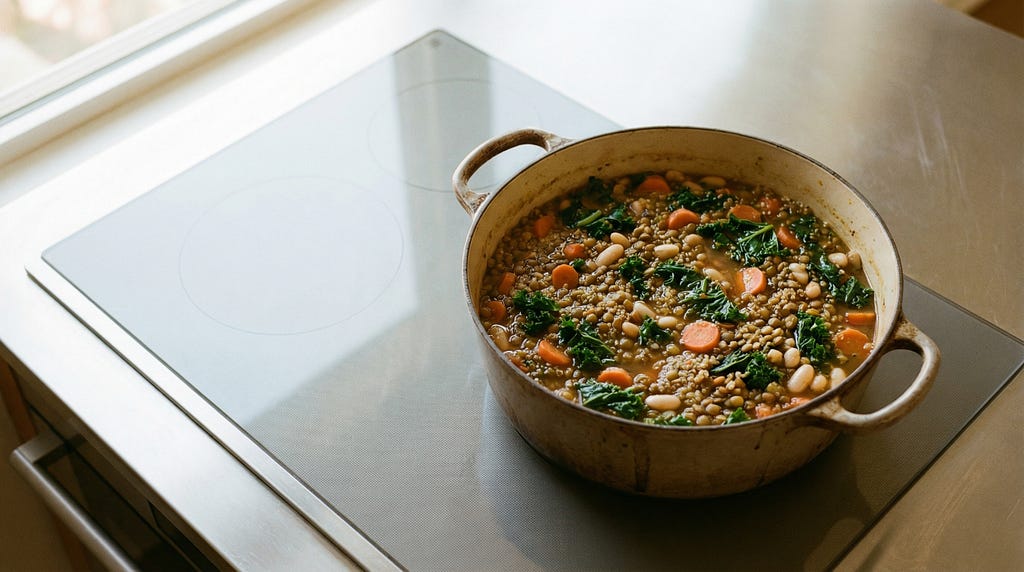
A meal that uses one pot and feeds you well is not a lesser meal. It is a better-designed one. It respects the fact that your energy is finite and that cleanup is part of the cost.
Frozen vegetables are not a failure. Canned beans are not cheating. Pre-cooked grains are not cutting corners. They are tools that reduce the aftermath without reducing the result.
The most sustainable meals are not the most elaborate ones. They are the ones that leave the kitchen quiet when you are done.
Design the Kitchen for the Exit
The environment matters more than the recipe.
If your most-used tools are buried in a drawer, you will reach for them less. If the counter is already cluttered, starting feels heavier. If the sink is full before you begin, the idea of adding to it stops you cold.
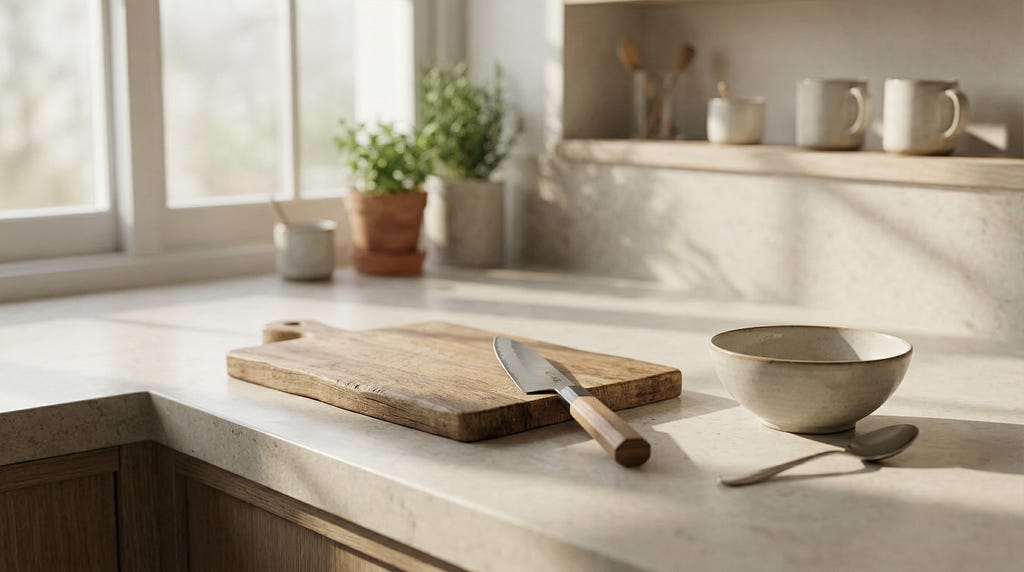
A kitchen that supports easy cooking is not a beautiful kitchen. It is a clear one.
Clear counter. Clean sink. One pan within reach.
That is enough to start. And more importantly, it is enough to finish.
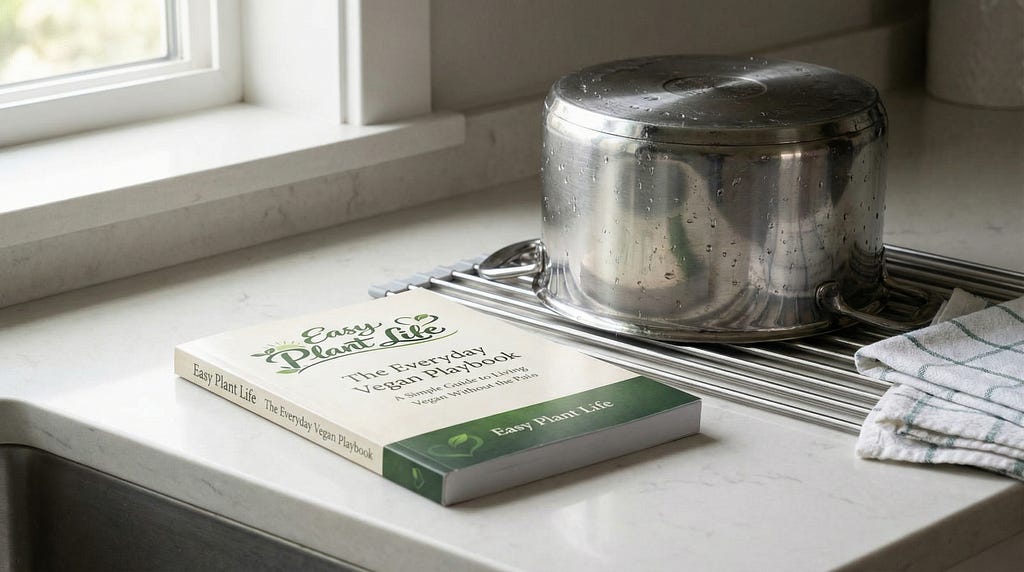
This is one of the core ideas in Easy Plant Life: The Everyday Vegan Playbook. Not just how to cook simply, but how to design the full cycle so that cooking stops feeling like a commitment and starts feeling like something you can do without borrowing energy from later.
The Meal That Disappears
The best everyday meal is the one you forget you made.
Not because it was bad. Because it was complete. It arrived, it fed you, it left. The kitchen returned to neutral. No evidence. No weight. No lingering task pulling at your attention from the other room.
That is what clean cooking feels like. Not spotless counters. Not perfect technique.
Completion.
When the exit is easy, starting stops being the problem.
And when starting stops being the problem, you cook more often than you expect.
Not because you found new motivation.
Because you removed the thing that was quietly standing in the way.