
You walk in for six things. You leave with a vision of who you could be next week.
A bag of something you have never cooked before. A vegetable you saw in a recipe once. A jar with a beautiful label that promises to make dinner feel like an event.
None of it is wrong. All of it is expensive in ways that have nothing to do with money.
The grocery store is not a neutral space. It is a carefully designed environment built to make you imagine a better, more interesting, more intentional version of yourself.
And that version almost never shows up on a Tuesday night.
You Are Not Shopping. You Are Auditioning.
Watch yourself the next time you browse the produce section.
Notice the moment you pick up something unfamiliar. Notice the small story that forms instantly. The meal you would make. The person you would be while making it. The kitchen that would smell a certain way. The evening that would feel a little more put together than usual.
That story is the product. The vegetable is just the prop.
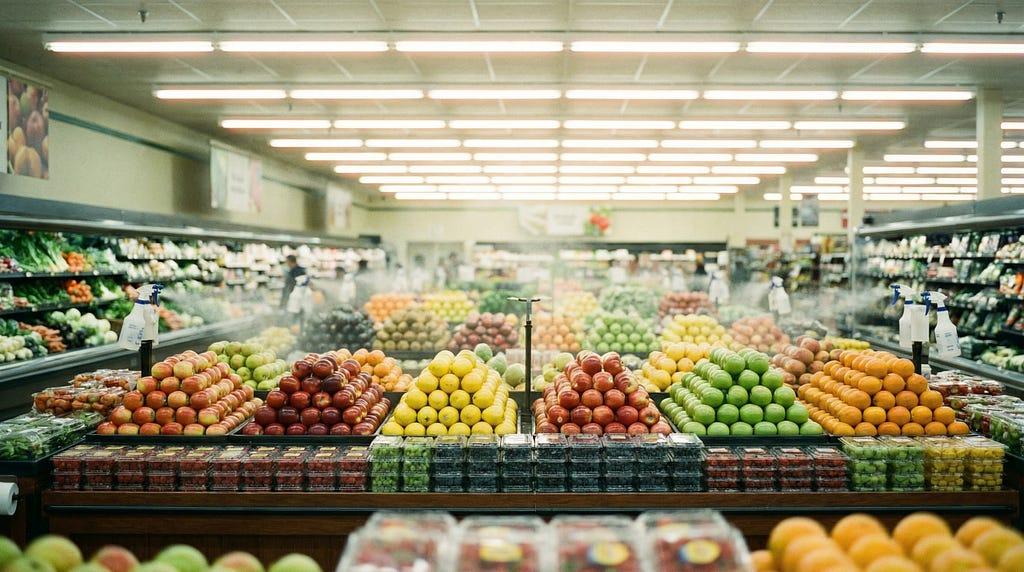
Grocery stores are built to trigger this. The lighting over the produce. The misting systems that make everything glisten. The careful stacking that suggests abundance and possibility.
You are not choosing ingredients. You are collecting intentions.
And intentions without infrastructure are just clutter in the fridge.
The Specialty Aisle Problem
The middle aisles are even more deliberate.
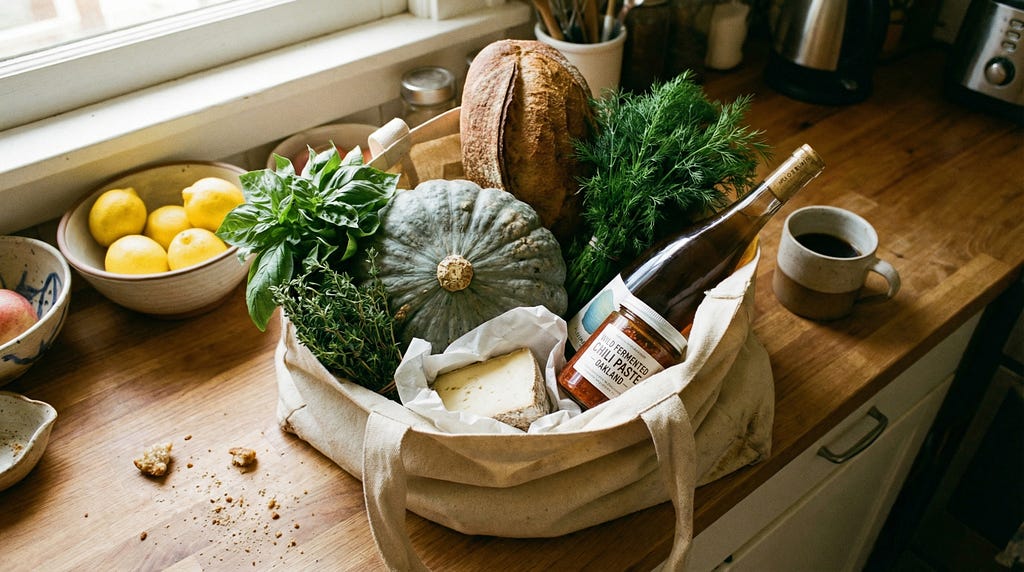
Every package is designed to suggest a version of your life that is slightly more curated than the one you are currently living. The sauce that transforms a meal. The grain you have been meaning to try. The snack that signals you are someone who makes thoughtful choices.
The language on the packaging is not informational. It is aspirational. Words like “artisan” and “craft” and “small-batch” are not descriptions. They are invitations to see yourself differently for the length of a grocery trip.
The problem is not that these products are bad. Many of them are fine.
The problem is that they require a future version of you to show up and use them. A version with time. With energy. With a specific kind of evening ahead.
When that version does not arrive, the products sit. They expire quietly. And the guilt that follows is not about waste.
It is about the distance between who you imagined and who you actually are on an average night.
Buying Potential Instead of Function
There is a pattern most people do not notice until someone points it out.
You buy for your best days.
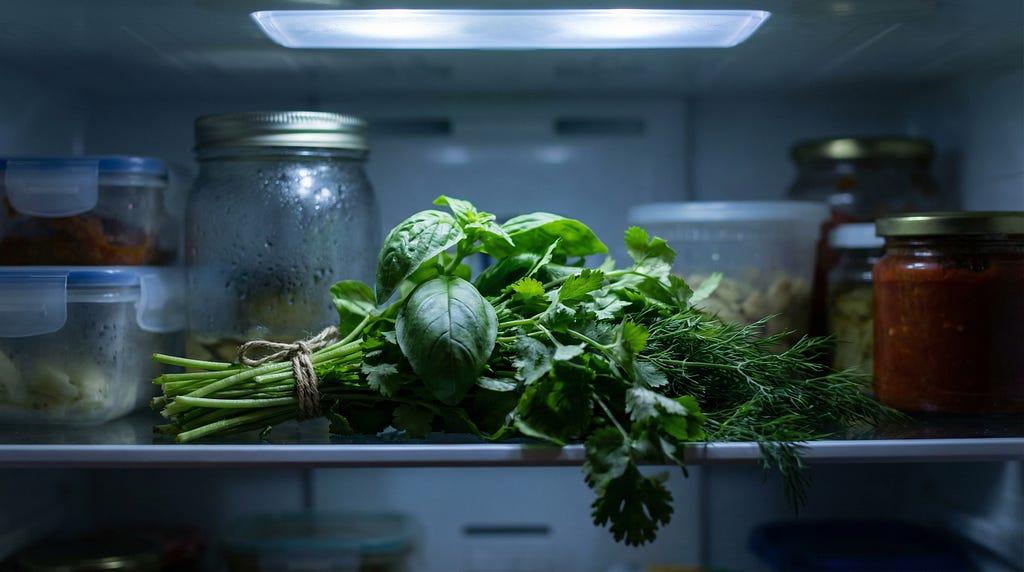
The ingredients that require inspiration. The items that only make sense inside a recipe you have bookmarked but not tried. The produce that demands to be used within three days or it turns into a quiet accusation from the crisper drawer.
All of it assumes conditions that are not guaranteed.
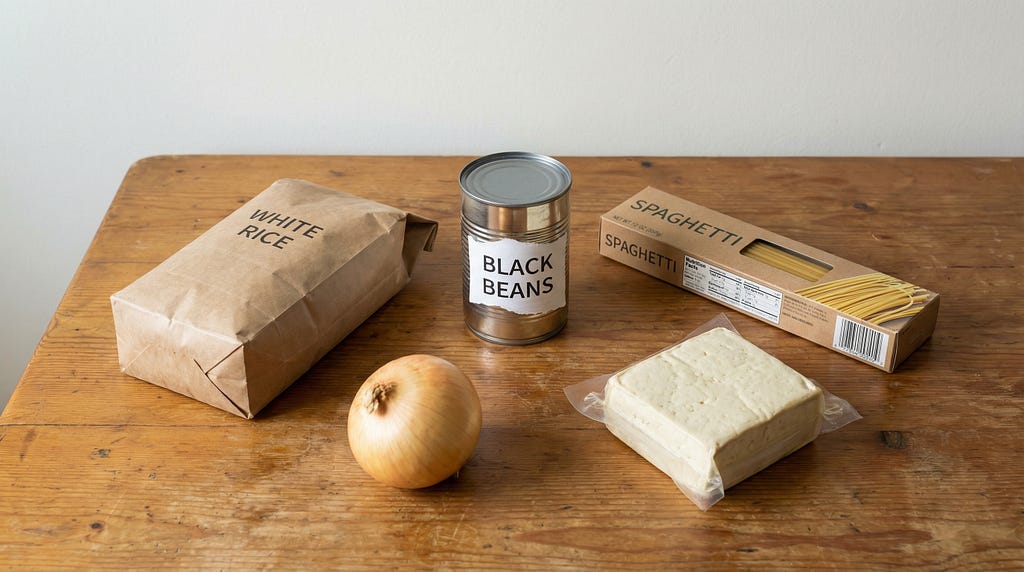
Meanwhile, the things that actually carry you through the week are unglamorous. Rice. Beans. Pasta. Tofu. Onions. The same reliable items that never promise anything exciting and never disappoint.
They do not look good in a flat lay. They do not suggest a lifestyle.
They just work.
The Cost Nobody Talks About
The hidden cost of aspirational shopping is not financial. It is cognitive.
Every item that carries a condition with it adds weight to your week. It becomes something to remember. Something to plan around. Something that quietly asks: are you going to follow through?
When the fridge is full of potential, opening it feels heavy. Not because there is nothing to eat. Because there is too much to decide.
A fridge full of intentions is harder to use than a fridge full of defaults.
This is why so many people stand in front of an overflowing refrigerator and feel like there is nothing for dinner.
There is plenty. But none of it is obvious.
Shopping as Maintenance
The alternative is not deprivation. It is not austerity. It is not giving up on good food.
It is a shift in what shopping is for.
Shopping is maintenance. You are not there to discover. You are there to restock.
The difference sounds small. It changes everything.
When you shop to restock, you move faster. You buy what you already know works. You replace what has been used instead of imagining what could be used. You leave without the quiet anxiety of promises you may not keep.
Your cart looks boring. Your week gets easier.
The fridge stops being a gallery of ambition and becomes something functional. Something that answers the question instead of multiplying it.
This is what The Normal Vegan calls shopping without imagining a better version of yourself. Not because improvement is bad. But because your groceries are not the place for it.
Let the Store Serve Your Actual Life
Next time you walk in, try this.
Do not browse. Replace.
Buy the things that disappeared last week. The meals you actually made. The ingredients you actually used. Skip the ones that sat untouched.
You will spend less time in the store. You will spend less energy during the week. And you will stop opening the fridge with the faint disappointment of looking at a life you did not get around to living.
The grocery store will always sell you a fantasy.
You do not have to buy it.