

At some point, someone will ask you why.
Why vegan. Why now. Why this and not something easier.
And the expectation, from them and from yourself, is that you will have an answer. A clear, well-formed reason that justifies the choice and makes it legible to the outside world.
Health. Ethics. The environment. Pick one. Commit to it. Let it carry you.
This is how most vegan content works. It gives you a reason and asks you to hold onto it.
But here is the problem with reasons.
They need to be maintained.
The Weight of Why
When your reason is health, every meal becomes a test. Did you eat well enough? Are you optimized? Are you sure this is better than what you were doing before?
When your reason is ethics, every slip becomes a moral question. Every compromise feels like betrayal. Every gray area becomes a debate you have with yourself at 9 p.m. while standing in front of the fridge.
When your reason is the environment, every choice expands. The packaging. The sourcing. The carbon math of almonds versus oats. Suddenly your lunch carries the weight of systems you cannot control.
None of these reasons are wrong.
But all of them are heavy.
And heavy things are hard to carry on ordinary days.

Identity Is Fragile Motivation
Most advice tells you to tie your behavior to your identity. Call yourself a vegan. Make it part of who you are. Let the label do the work.
This sounds powerful. And for a while, it is.
But identity-driven motivation has a flaw. It requires consistency to survive. The moment you act outside the identity, the identity cracks. And when it cracks, the behavior often goes with it.
One compromise becomes a crisis. One inconsistency becomes evidence that you were never really committed.
The label that was supposed to carry you starts judging you instead.

What Happens When the Reason Fades
Motivation is not constant. Conviction fluctuates. The documentary that changed your life six months ago lives in a different emotional register now.
On the days when the reason feels distant, eating becomes a negotiation. You are no longer choosing food. You are defending a position.
That is exhausting.
And exhaustion does not lead to better choices. It leads to avoidance.
The Quiet Alternative
The people who sustain this the longest tend to share something unexpected.
They stopped needing a reason.
Not because they stopped caring. But because the choice moved from something they believed in to something they did. It shifted from conviction to default. From identity to infrastructure.
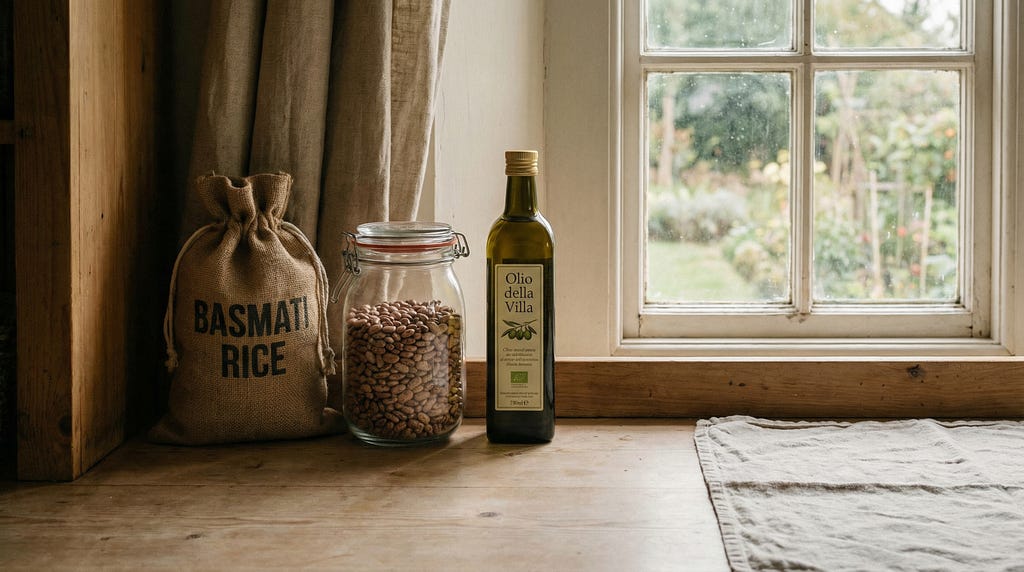
They do not wake up and choose veganism each morning. They wake up and eat breakfast. The breakfast happens to be vegan, not because of a principle revisited daily, but because the kitchen is already set up that way.
The meals are familiar. The groceries are predictable. The pattern runs without being powered by belief.
It just runs.
Defaults Do Not Need Defending
When eating is anchored to a reason, it lives in the realm of argument. Every social situation becomes a potential debate. Every question feels like it needs a thorough answer.
When eating is simply a default, the questions shrink.
Why vegan?
It’s just how I eat.
That answer is small. Unimpressive. Hard to argue with.
And that is exactly why it works.
There is nothing to defend. Nothing to explain at length. Nothing that requires you to perform your values in public.
The choice becomes quiet enough to sustain itself.
From Belief to Background
The shift is not dramatic. It does not happen in a single moment.
It happens when you stop treating each meal as a reflection of your commitment and start treating it as something that simply needs to happen.
It happens when you build a kitchen that answers the question before you ask it.
It happens when repetition stops feeling like limitation and starts feeling like relief.
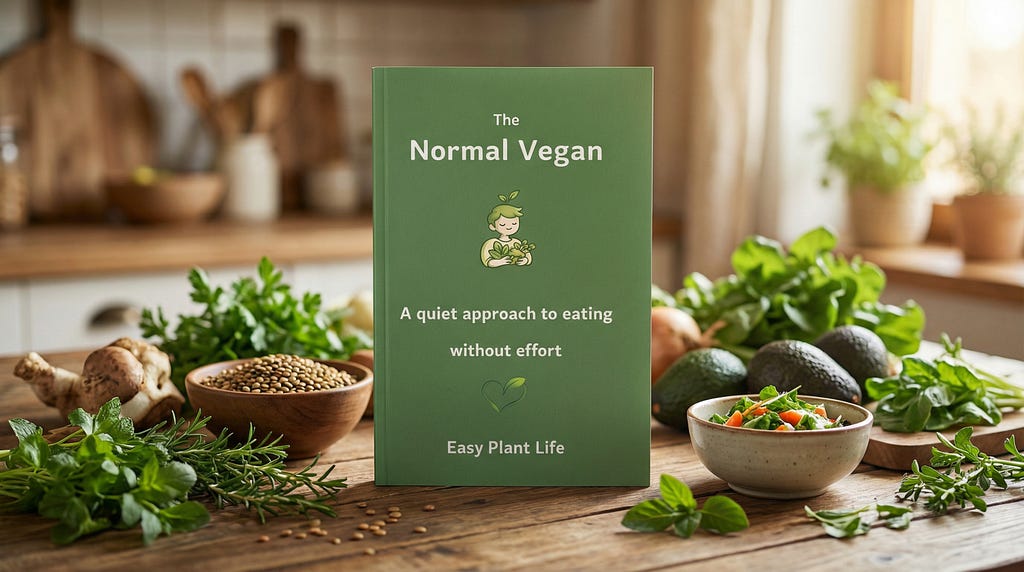
This is what The Normal Vegan is about. Not the reason to start, but the quiet mechanics of continuing. What eating looks like when it stops demanding attention and starts supporting your life instead of competing with it.
You Already Have Enough Reasons
If you are reading this, you probably do not need another argument for why.
You have heard them. You may have lived them.
What you might need instead is permission to let the reason go.
Not to stop caring. But to stop requiring yourself to care actively, visibly, and daily in order to keep eating this way.
Let it become boring. Let it become obvious. Let it fade into the background of a life that has better things to focus on.
The most sustainable version of this is not the most passionate one.
It is the most forgettable one.
And that is not a failure of commitment.
It is the whole point.